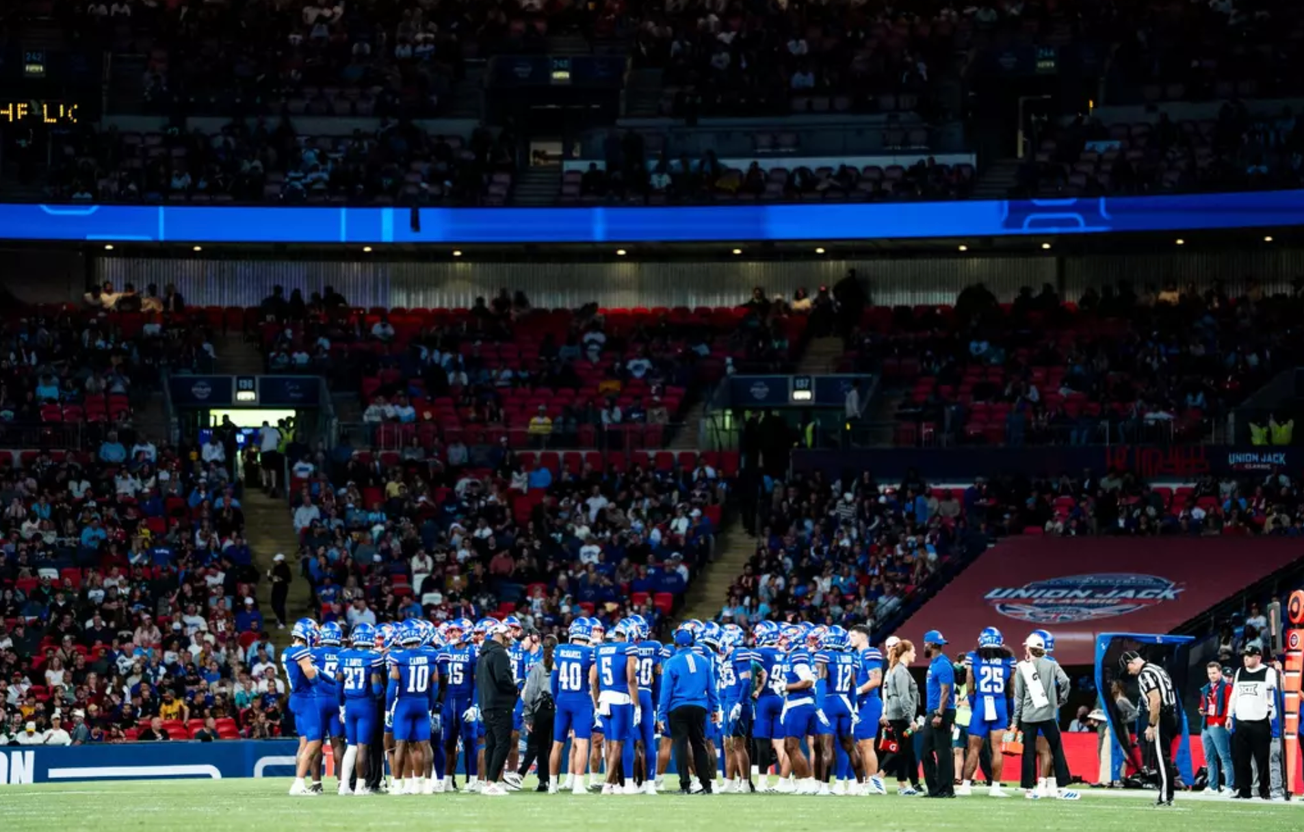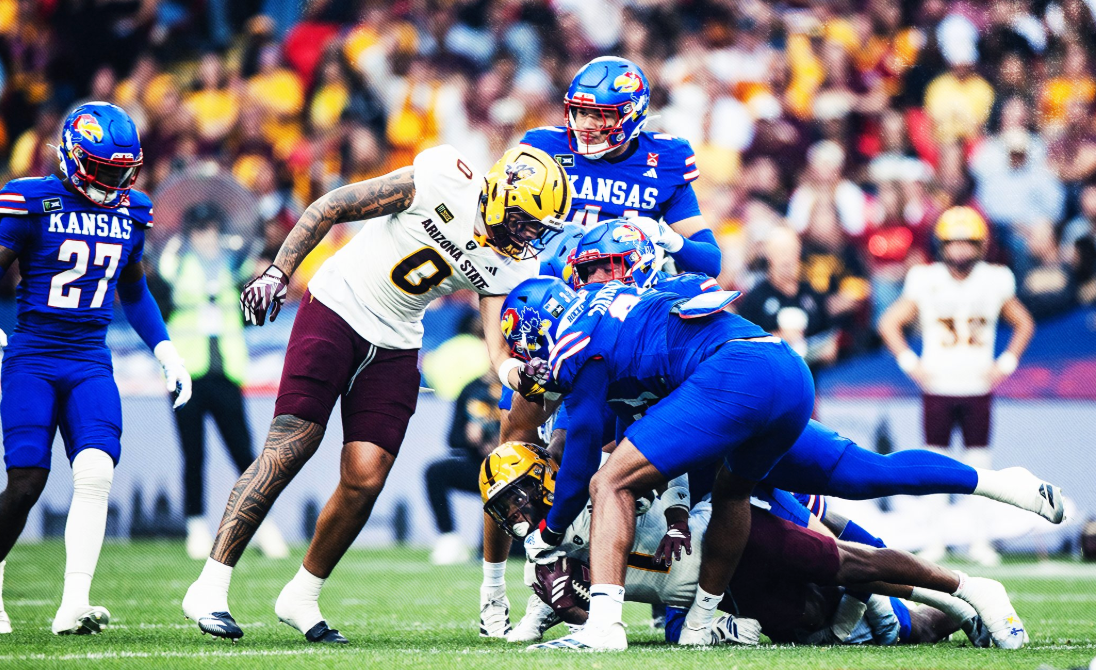
The Kansas football team is now deep into its first and only bye week of the 2026 season and, like every team, the Jayhawks no doubt have spent at least some of the week analyzing the good, the bad and the ugly of their season to date.
So, let's join them. From our own unique perspective, anyway.

To keep it clean and structured, we'll take a look at three things we've learned about this team so far — one on offense, one on defense and the last on special teams.
Three phases. One lesson from each. All of them key parts of where this team and this season will go from here on out.
Offense – The Zeke Marshall experience
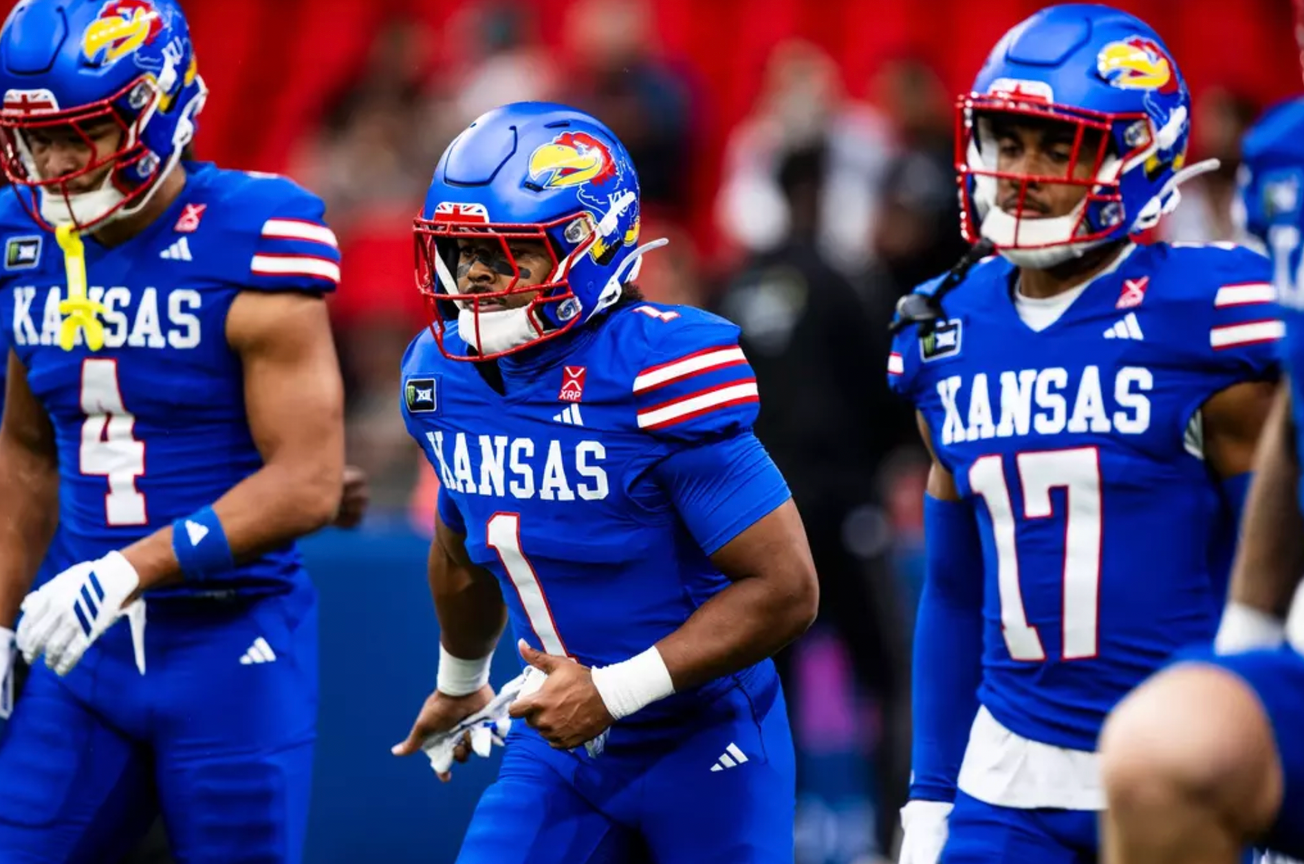
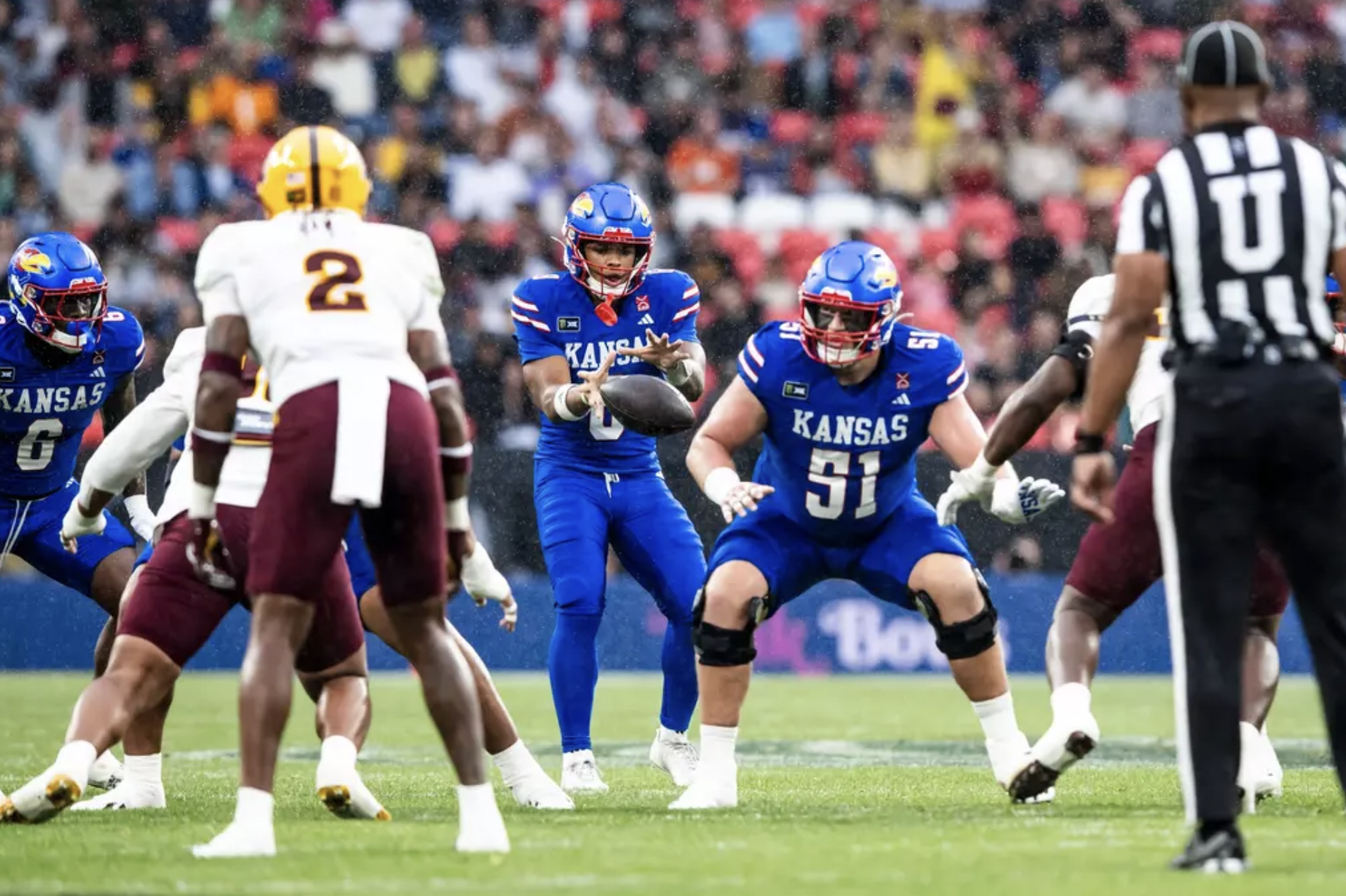
It's been a mostly mixed bag with KU's starting quarterback this season. He played a terrific first game in a win over Long Island. He had a rough outing against Mizzou in Week 2. And he was a blend of good and bad in the recent loss to Arizona State in London.
So, what have we learned? Not a lot, actually.
Until Marshall can play with more consistency, it's hard to make a complete read on exactly what KU's got in him as their quarterback. He throws some strikes. But he also still throws high and misses some throws that he's got to make for the KU offense to hum.
He's also had trouble with quite a few snaps and turned the ball over 4 times.
If there's any kind of silver lining in those misses, it's that Offensive Coordinator Andy Kotelnicki has done a good job of scheming guys open for Marshall to find and they've gotten a few big plays off of it. No one has shown that better than top threat Nik McMillan, who has been great during his first three games as a Jayhawk.
But in order for this offense to take the next step — and that next step is winning games in the Big 12 with Marshall under center — the young QB has to take what he's learned in his first three starts — good and bad — and package it into more consistent play.
If he's able to do that, KU could be competitive in several of the nine games still left on the schedule. If not, we could be headed toward a long season or possibly someone else getting a look at quarterback.
Defense – Front 7 is as advertised
A lot of the talk this preseason was about how good KU's defensive ends were and how much better the linebackers have looked than what KU has put on the field there during Lance Leipold's first five seasons with the Jayhawks.
Both things have shown up in a big way in the first three games of the season, and the front seven has looked solid in a bunch of different spots. The depth has shown up, the talent has flashed, and the defense, as a whole, has played well enough in all three games for KU to win.
The front seven has to get help from the secondary in the form of consistency and play-making, and the entire unit obviously has to keep that up in order to compete in the Big 12 going forward.
But with Leroy Harris III, Trey Lathan, David Santiago and a rotation of guys along the interior D-Line making plays and playing hard, this group should enter the rest of the season with some pretty good confidence.
There are miscues and issues throughout the defense that still need to be cleaned up. But, like Marshall, they're showing a little bit of growth and continue to push toward a comfort level as a cohesive unit. Remember, though, consistency is what it's going to take for this team to make a push for six wins and bowl eligibility.
Without it — if the defense has good games and bad games or even good halves and bad halves — it's pretty easy to see other Big 12 programs making KU pay.
Special Teams – Pick a path, triumph or trouble
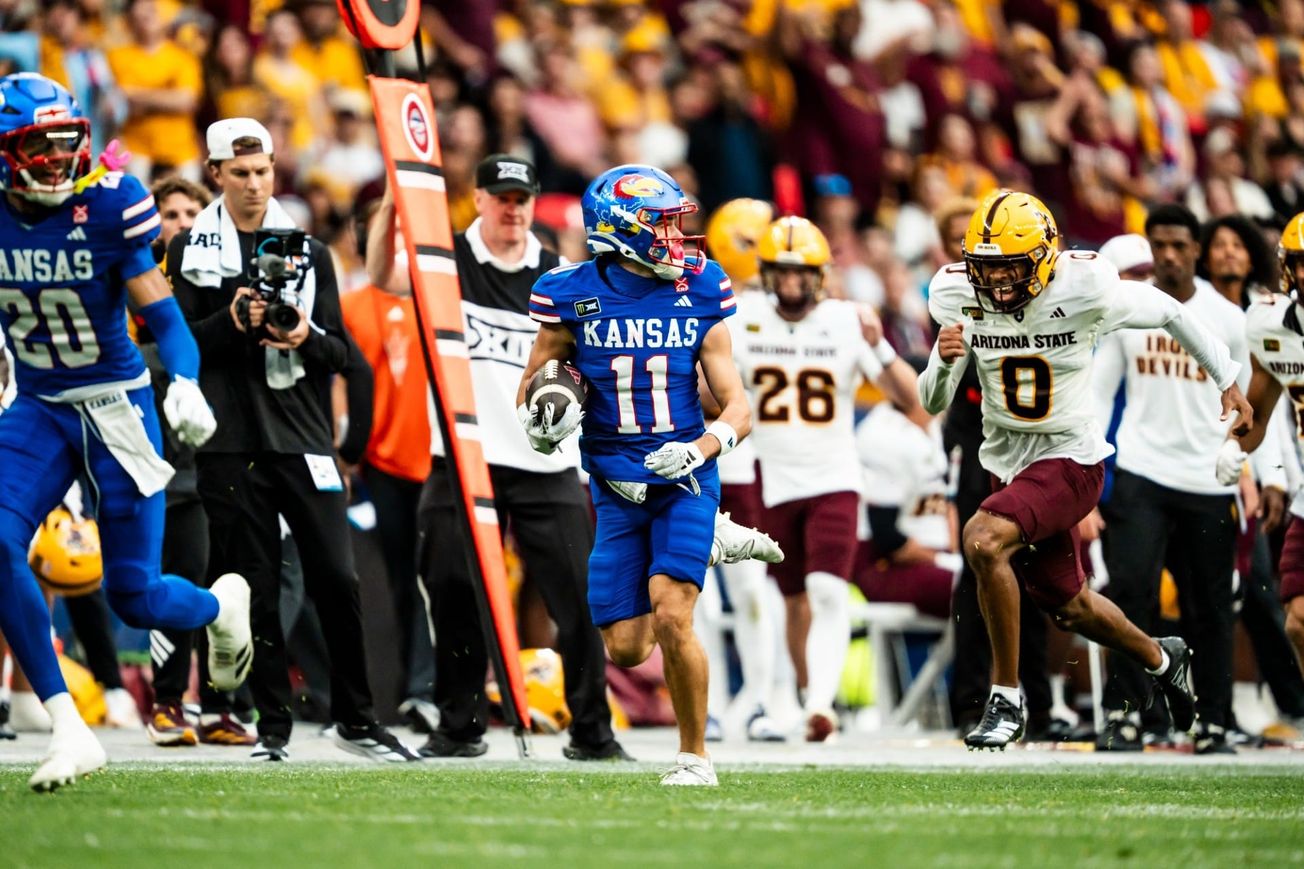
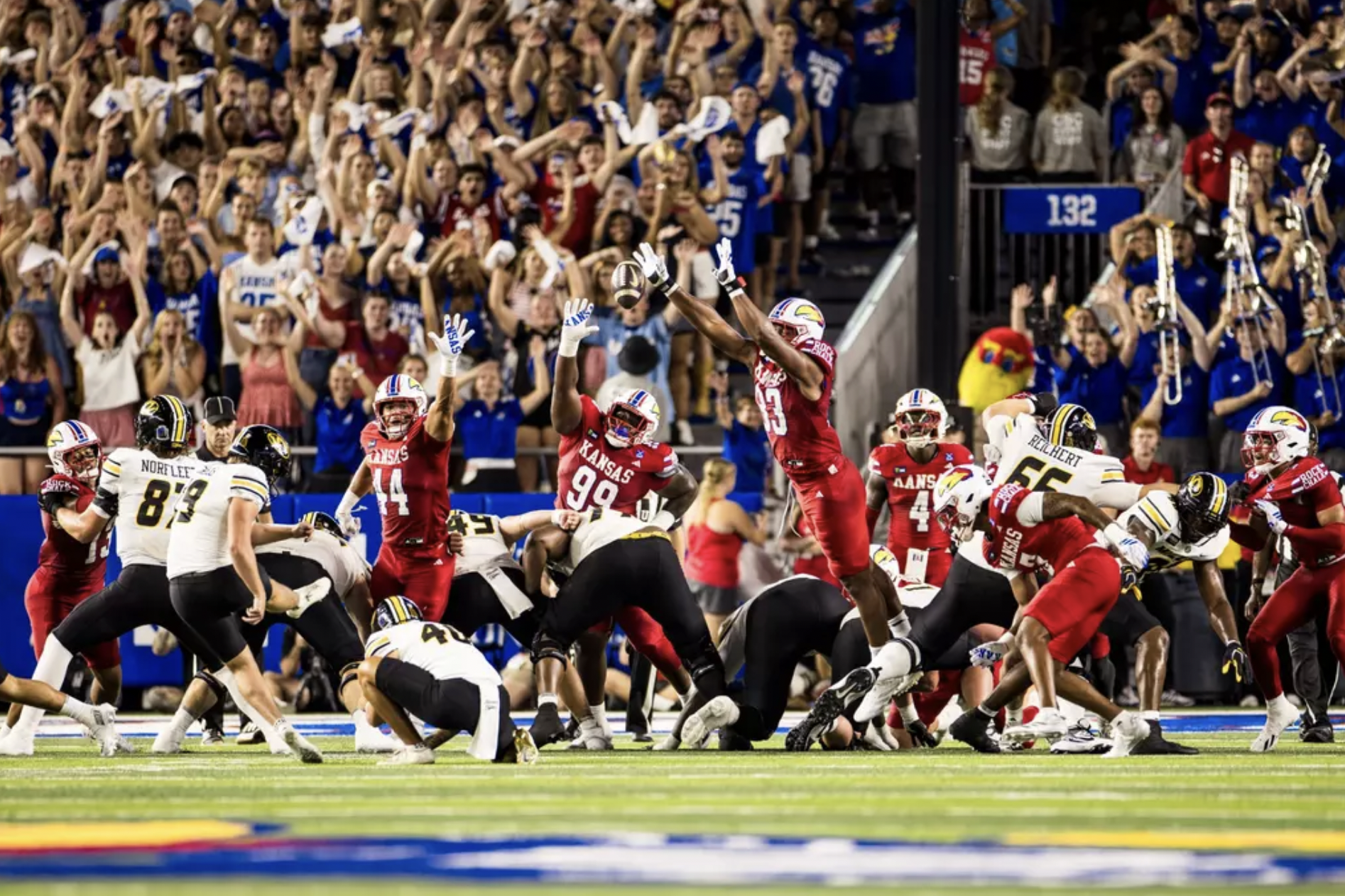
In just three weeks, KU's special teams has had a major impact on multiple games, with a huge showing in the first half against Missouri and a memorable punt-return touchdown in London against Arizona State.
Clearly, the schemes and personnel KU has utilized on special teams so far has been a positive for the program.
Here's the problem, though. The kicking game hasn't been very good. In fact, it might've cost KU the Arizona State game and the return game has been feast or famine in terms of the returns helping KU's offense but not the KU defense.
Punter Matt Gill is averaging 37.6 yards per kick, with 4 fair catches, one downed inside the 20 and a long of 44. KU's opponents have also averaged 37.6 yards per game, but have downed 4 inside the 20, forced 6 fair catches and connected on 4 boots of 50 yards or more.
In addition, place kicker Martin Connington is 2-for-4 on field goals, with his misses coming from 44 (ASU) and 52 (MU) yards.
The Jayhawks are tied for second in the country in blocked kicks — both of them coming against Missouri, including one that was returned for a touchdown — but also rank 108th in kickoff return at 16 yards per attempt, 35th in the country in punt returns 14.50 per return and 110th in net punting.
It's important to note that the 2 blocked kicks and punt return for a touchdown in just three weeks is the most significant part of the special teams equation. Some teams go entire seasons without blocking a kick or returning a punt for a TD. So, KU has done well in helping itself via special teams. Like in other areas, the Jayhawks just have to stop hurting themselves, too, and this could become a bona fide strength and a game-changer against just about anyone.
After taking this Saturday off, the Jayhawks (1-2 overall, 0-1 Big 12) will jump back into action the following Saturday (Oct. 3) with an 11 a.m. kickoff against Middle Tennessee at David Booth Kansas Memorial Stadium.
That game will be televised on ESPNU.
After that, it's eight straight Big 12 games in eight weeks to close the regular season, starting with a tough road test at 15th-ranked Utah (Oct. 10), time and TV to be determined.
— For tickets to all KU athletic events, visit kuathletics.com